About Oakland Chinatown:
- Founded: 1850s
- Population: 3,425
- Area: 6th Street to 12th Street, Broadway to Fallon Street
- Major Languages: Cantonese, Taishanese, Mandarin, Vietnamese
- Migrants: Canton Province (South East China), Hong Kong, China, Vietnam
- Point of Interest: Pacific Renaissance Plaza (388 9th Street)
- Local activities: Lincoln Square Park, Oakland Public Library Asian Branch, Oakland Asian Cultural Center
Source: Visit Oakland
From the gold rush...
Oakland Chinatown dates back to the arrival of Chinese immigrants in the 1850s, making it one of the oldest Chinatowns in North America. By 1860, the census of Oakland included 96 "Asiatics" among a total of 1,543 (6.2% of the city's population). More Chinese arrived to help build the Central Pacific Railroad western portion of the First transcontinental railroad during the Coolie slave trade during the 1860s.
The Chinese settled in shrimp camps on the estuary of Oakland at 1st Street and Castro in the 1850s, near the Point in West Oakland which was referred to as "Chinese Point", and at 4th and Clay streets. The Chinese settlement at Telegraph between 16th and 17th streets burnt down in 1867 and was relocated at the San Pablo Avenue Chinatown between 19th and 20th streets; it is now known as Oakland's Old Uptown Chinatown.[1] Other areas settled were 14th Street between Washington and Clay, and the Charter line (22nd Street) between Castro and Brush Streets.
Fears of the Yellow Peril and local exclusion laws forced the Chinese population to resettle to its current location centered at 8th Street and Webster Street in the 1870s.
The first Chinese in Oakland fished in the San Francisco Bay for shrimp similarly to the Chinese at China Camp near San Rafael.[2] In 1868, Chinese laborers built the Temescal Dam in Oakland providing water for the East Bay as well as the Lake Chabot Dam in 1874–75. They worked in canneries, cotton mills and fuse and explosive factories as well as farms. In the 1880s, discriminatory laws made it difficult for Chinese immigrants to own land or even find work. They found work as laundry workers, cooks, gardeners, houseboys, or as vegetable peddlers. The Chinese Exclusion Act severely limited the further immigration of Chinese. By 1900, the Chinese in Oakland numbered less than 1,000.
The 1906 San Francisco earthquake and fire destroyed most of San Francisco's Chinatown and more than 4,000 Chinese survivors found refuge in Oakland. Even while San Francisco Chinatown was rebuilding, many stayed in Oakland, bringing the Chinatown population to about 2,500. Because of immigration restrictions barring Chinese women and children, a bachelor society was created.
In the 1920s, Oakland Chinatown grew from 10th Street to the waterfront from Broadway to Harrison.
Even until 1940, the Chinatown population grew only to about 3,000. With the United States involvement in World War II and the fact that China was an ally, the Chinese Exclusion Act was repealed in 1943, however the immigration quota was maintained at 105 immigrants per year.[3]
In 1950, Chinatown grew to a population of 5,500, but local housing was lost due to the construction of Interstate 880, which runs through 8 blocks between 5th and 6th streets and serves as a transportation artery for some of Chinatown's commercial activity, Laney College (8 blocks) and later in the late 1960s, the Bay Area Rapid Transit headquarters and Lake Merritt station (2 blocks) and Oakland Museum of California (4 blocks).[4]
Oakland Chinatown was economically stagnant for many years, especially after multigenerational Chinatown residents began moving to the suburbs in the late 1960s. However, Chinatown saw much steady development during the 1980s and 1990s as Chinese American merchants relocated from San Francisco to Oakland, and due to increased immigration from mainland China, Hong Kong, Vietnam, Cambodia, and Thailand. During this time period, many ethnic Chinese Vietnamese and Chinese Cambodians began opening new small businesses, essentially replacing many of the older Taishanese-dominated businesses. Also, investors with Hong Kong backgrounds constructed the Pacific Renaissance Plaza in the early 1990s. Chinatown still retains the traditional aspects and characteristics of an older Chinatown. Oakland's Chinatown also includes a historic and still thriving fortune cookie factory.
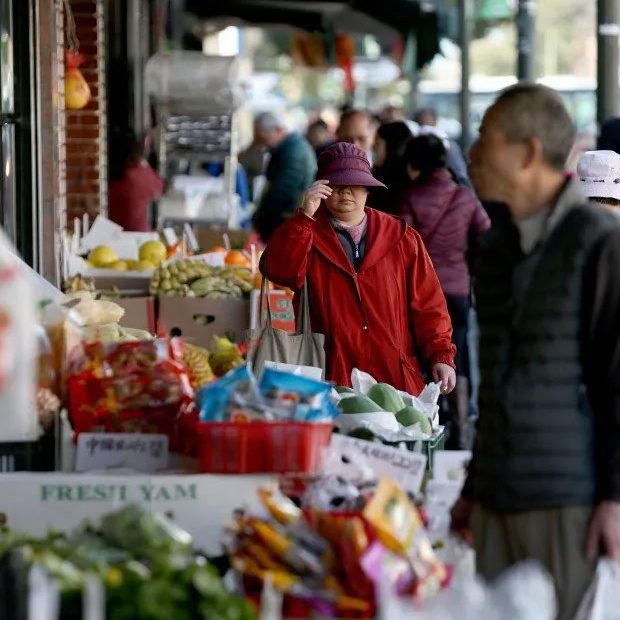
Although it is overshadowed by its more prominent, tourist-oriented counterpart in San Francisco, Oakland's Chinatown is bustling with activity and considered to be more authentic to many. Other Asian cultures are represented in Oakland's Chinatown as it has also been settled by non-Chinese Asians such as ethnic Vietnamese (many of whom operate many of Chinatown's jewelry businesses), Koreans, and Thais making it more of a pan-Asian area as opposed to a "Chinatown." As is the case with other retail and commercial districts around Oakland, the many customers and thriving businesses in Chinatown generate sales tax revenue for Oakland city and Redevelopment Agency coffers.
Japanese immigrants began settling in Oakland in the 1890s mostly in West Oakland around Market Street. Later, hundreds were living in the section between Harrison and Oak streets south of 8th Street. They owned several stores in Chinatown.[5] After the attack on Pearl Harbor in 1941, all Japanese Americans were sent to internment camps. The Masuda family had posted a large "I Am An American" sign outside their Oakland grocery store, Wanto Company, at 8th and Franklin streets which was photographed by Dorothea Lange.[6] Many did not return to Oakland after the war ended. The Buddhist Church of Oakland is one of the few institutions remaining of Oakland's Japantown.[7]
Filipinos immigrated to the area in the early 1900s. Oakland Chinatown was the center of commerce and community gathering for Filipinos in the East Bay during 1940–1960.[8]
Source: Wikipedia
The Vibe
Although it is overshadowed by its more prominent, tourist-oriented counterpart in San Francisco, Oakland's Chinatown is bustling with activity and considered to be more authentic to many. Other Asian cultures are represented in Oakland's Chinatown as it has also been settled by non-Chinese Asians such as ethnic Vietnamese (many of whom operate many of Chinatown's jewelry businesses), Koreans, and Thais making it more of a pan-Asian area as opposed to a "Chinatown."